The Buckskinner Cookbook: Fur-Trade Camp Cooking
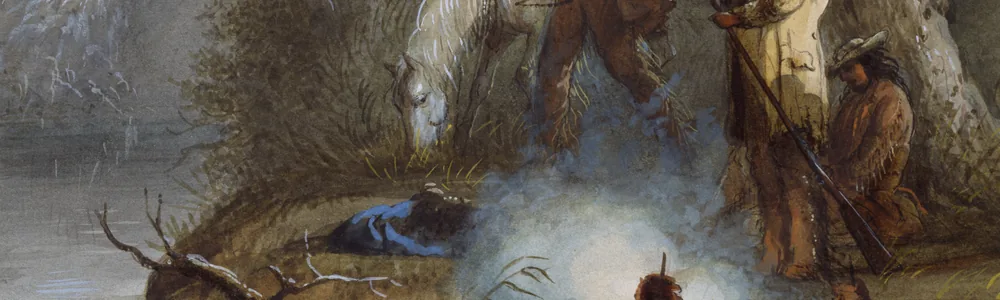
The buckskinner cookbook is the camp kitchen of the fur-trade era and of the living-history shooters who keep it alive. Its staples were the foods a trapper could make from what he carried and what he killed: pemmican (dried meat pounded with fat and berries), bannock or journey bread cooked on a stick or in a skillet, jerked meat, and boudin from a fresh buffalo. The cooking is plain, portable, and built around an open fire — the same methods used at a modern rendezvous, where period cooking is part of the event.
A mountain man ate what the country gave him. For most of the year that meant meat — buffalo above all, then elk, deer, and whatever else the rifle brought down — supplemented by what could be carried in a possibles bag and bought at the summer rendezvous: flour, coffee, sugar, and salt. There were no ovens and no iceboxes. Everything was cooked over a fire, dried for the trail, or eaten fresh on the day of the hunt. The recipes that came out of that life are simple by necessity, and they have outlasted the trade because buckskinners, the hobbyists who recreate the era, still cook them at their gatherings.
What follows is a working guide to the camp kitchen: the preserved foods that traveled, the breads made without an oven, the fresh-kill dishes of a good hunting day, and the drinks of the fire circle. The methods are period; the cautions about handling wild game and open fire are modern common sense.
Pemmican: the original trail food
Pemmican was the most important preserved food of the fur trade, learned by the trappers from the Plains nations who had made it for centuries. Lean meat — buffalo, or venison — was dried hard, then pounded nearly to a powder. Rendered fat was melted and worked into the pounded meat, often with dried berries such as chokecherries or currants, and the mixture was pressed into cakes or packed into rawhide bags. Sealed with fat, it kept for months and traveled without spoiling.
In camp, pemmican could be eaten cold as it was, sliced from the cake, or dropped into a pot of boiling water with a little flour to make a thick, rich soup the trappers called rubaboo. A pound of it carried more sustaining energy than several pounds of fresh meat, which is exactly why it traveled in every brigade’s packs.
Traditional pemmican relies on the meat being dried thoroughly and sealed under fat with very little moisture left, which is what makes it shelf-stable. Modern food-safety guidance is to dry the meat hard, keep everything scrupulously clean, and store the result cool and dry. If you are making it to eat rather than to display, treat it as you would any home-dried meat.
Bannock and journey bread: baking without an oven
Bread on the trail meant bannock: a simple dough of flour, a little fat, salt, and water, with a leavening if one had it. It needed no oven. The dough could be patted flat and fried in a greased skillet, baked in a cast-iron spider set among the coals, or wrapped in a ribbon around a green stick and turned slowly over the fire — the form sometimes called a “twist” or journey bread. The result was dense, plain, and filling, the bread of men who measured a meal by whether it would carry them through a day’s work.
Where flour was short, cornmeal stood in, and the same fire and skillet produced a coarse corn cake. The point of camp bread was never refinement; it was calories that kept, made from the one or two dry goods a trapper bought at rendezvous and carried until the next one.
Fresh from the hunt
A successful hunt changed the menu. The first meal off a fresh buffalo was often boudin, the small intestine cleaned, sometimes stuffed, and roasted over the fire — a delicacy the trappers prized far above the prime cuts an Eastern cook would have chosen. The hump, the tongue, and the fat-rich ribs were the favored pieces; lean meat alone left a man “greez hungry,” craving the fat that the hard mountain life burned through.
Meat not eaten fresh was made to keep. Thin strips hung on a rack over a low, smoky fire became jerky — light, durable, and ready for the trail or for pounding into pemmican. The same rack-and-smoke method served for fish and for any game the season provided. Nothing of a kill was wasted; in a country with no store and no certainty of the next animal, waste was a luxury no trapper could afford.
- Boudin — roasted buffalo intestine, the celebrated first meal of a fresh kill.
- Hump and tongue — the buffalo’s prized cuts, rich and tender.
- Jerky — meat dried in thin strips over a low fire, the basis of pemmican and the staple of the trail.
The fire circle: coffee and camp drinks
Coffee was the one indulgence almost every trapper carried, bought green at rendezvous, roasted in a skillet, crushed with a rifle butt or a stone, and boiled hard in a pot — strong, black, and grounds-and-all. It was the drink of the morning fire and the evening one. Where coffee ran out, a “mountain tea” was brewed from local leaves and bark, and the Native peoples’ kinnikinnick, a smoking mixture of inner bark and dried leaves, was traded and shared around the same fires.
The rendezvous itself ran on stronger stuff — whiskey hauled out by the barrel and sold at famously inflated prices — but that belonged to the few weeks of the summer gathering. The daily drink of the trapping camp was coffee, and a good deal of frontier reputation rode on a man’s ability to make it strong.
Cooking it today
At a modern rendezvous, the camp kitchen is part of the event. Buckskinners cook over open fires in cast iron and tin, using period methods and avoiding obviously modern ingredients, both for authenticity and for the simple pleasure of it. A club’s calendar of black-powder shoots and living-history weekends is usually also a calendar of camp cooking, where pemmican, bannock, and fire-roasted meat are made and eaten much as they were on the Green River two centuries ago.
The recipes reward a light hand and a hot fire more than any precise measurement. That, too, is period: a trapper cooked by eye and by hunger, and the buckskinner who follows him does the same.
Common questions
What is pemmican made of?
Pemmican is lean meat — traditionally buffalo or venison — dried hard, pounded fine, and worked together with rendered fat, often with dried berries added. Pressed into cakes and sealed under fat, it keeps for months and was the fur trade’s main trail food. It can be eaten cold or boiled with a little flour into a soup the trappers called rubaboo.
How did trappers bake bread without an oven?
They made bannock, a plain dough of flour, fat, salt, and water that needs no oven. It was fried in a greased skillet, baked in a cast-iron pan among the coals, or wound around a green stick and turned over the fire as a “twist.” Dense and filling, bannock was the everyday bread of the trail, made from the small stock of flour a trapper bought at rendezvous.
What did mountain men actually eat day to day?
Mostly meat: buffalo when they could get it, then elk and deer, with the fat-rich cuts like hump, tongue, and ribs preferred over lean meat. This was rounded out with bannock or corn cake, dried pemmican for the trail, and strong boiled coffee. Fresh fruit and vegetables were rare; a trapper’s diet rose and fell with the hunt and with what could be carried from the summer gathering.
Is buckskinner cooking still practiced?
Yes. Buckskinners — the living-history hobbyists who recreate the 1820–1840 fur-trade frontier — cook period food over open fires as part of modern rendezvous events. Pemmican, bannock, jerky, and fire-roasted game are prepared with cast iron and tin and period methods, and camp cooking is a regular feature of the black-powder shoots and heritage weekends that muzzleloading clubs hold.